I Backed Into My Garage Door — What to Do Next (Without Making It Worse)
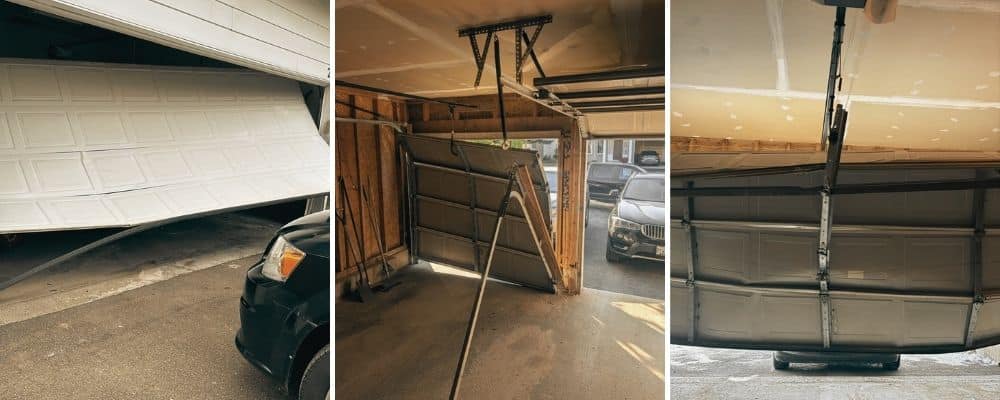
Table of Contents
One second you’re backing out like you’ve done a hundred times… the next you’re staring at a crooked garage door panel, a bent track, and an opener that suddenly sounds like it’s struggling for its life.
If you backed into your garage door, the goal right now is simple: keep it safe, stop the damage from spreading, and figure out the smartest repair path—without turning a fixable issue into a full replacement.
Below is the exact step-by-step process we recommend in Ottawa when a garage door gets hit by a vehicle.
Do this first: the 5-minute checklist
Stop using the opener immediately.
Don’t keep pressing the button “to see if it works.” That’s how small damage becomes big damage.Keep people and pets away from the door.
If the door is crooked or hanging, it can shift suddenly.Look for obvious danger signs (from a safe distance):
door is tilted or one side is lower
rollers popped out of the track
loose/dangling cable
loud bang (possible spring failure)
door won’t stay up or feels unusually heavy
If the door is stuck open, secure the opening as best you can.
More on that below.Take photos (wide + close-ups) before anything moves.
Helpful for insurance, warranties, and getting a fast quote.
If you’re in Ottawa and need same-day help, our team is set up for same-day garage door service and can fix most issues in one visit.
Why “just a dent” can become a real problem fast
A garage door isn’t like a bumper. It’s a moving system under tension. When a car hits the door, even lightly, it can:
bend tracks just enough to bind rollers
twist a section so the door “folds” as it moves
pull hinges out of alignment
strain the opener (which then keeps pushing against resistance)
That’s why the worst thing you can do is keep running the opener. If the door is binding, the opener will try anyway—until something gives.
Quick diagnosis: what happened to your door?
1) The door is dented but still opens and closes normally
This is the “best case.” If the door moves smoothly, you may be dealing with cosmetic damage only.
Still worth checking: dents near the edges or seams can distort how sections meet, which can later cause rubbing, noisy operation, or premature wear.
What to do next: schedule a basic inspection/tune-up so the track and hinges are verified before the door starts binding.
2) The door is crooked or one side looks lower (likely off-track)
If it looks “racked” (tilted) or the gap on one side is bigger, assume a roller has popped out or the track is bent.
Do NOT force it open or closed. A crooked door can fold a section, snap hardware, or pull a cable.
What to do next: this is usually a track/roller/cable re-seat + alignment job for a technician.
3) The door won’t close, or it closes then instantly reverses
After a bump, this can be:
the door binding (track/panel misalignment)
the photo-eye sensors knocked out of alignment
the opener sensing unusual resistance and reversing for safety
Quick safe check: wipe the photo-eyes and make sure both sensor lights are steady. If the door still reverses, stop running it—binding is likely.
4) You heard a bang, or the door feels heavy (possible spring issue)
If a spring fails (or was already weakened), the impact can be the final straw. A broken spring can make the door:
extremely heavy
uneven
unable to lift properly
This is not a DIY moment.

What NOT to do (seriously—avoid these)
Don’t keep hitting the remote.
The opener can turn a minor alignment problem into major structural damage.Don’t loosen anything related to springs or cables.
Springs and lift cables are under tension and can cause injury.Don’t try to “bend the track back” blindly.
Track geometry matters—tiny changes can cause rollers to bind.Don’t lift a jammed door alone.
If cables are uneven or a roller is out, the door can shift.
If your garage door is stuck open: how to secure your home
A door stuck open is equal parts security problem and weather problem (hello, Ottawa winters).
Here’s what you can do safely:
Unplug the opener so nobody activates it accidentally.
Keep everyone away from the door area until it’s stabilized.
Move valuables out of sight if the garage is exposed.
Use temporary barriers (vehicle parked inside, plywood, or a temporary lockable interior door if you have one).
If the door is hanging, crooked, or cables look loose: treat it as urgent and book service.
Get Same-Day Garage Door Help
Hit your garage door with your car? Send us a photo and we’ll give you a fast, honest recommendation—repair vs. replacement—and book a technician in Ottawa today.
Repair vs replacement: what usually makes sense after an impact
Most “backed into the door” calls end up being one of these:
A) Track + roller + hinge repair (very common)
This is typical when the door is crooked, rubbing, or noisy after impact. Often fixable same-day.
B) Single panel/section replacement
If one section is creased badly (especially near the edge), replacing a section can restore proper movement—if the model and style are available.
C) Full door replacement
Replacement becomes more likely when:
multiple panels are damaged
the door is older and parts are hard to match
the impact twisted the door frame enough that operation will never be smooth again
If you’re comparing costs, our site breaks down Ottawa garage door replacement pricing factors like removal/disposal, track alignment, springs, and opener adjustments.

Insurance: should you file a claim?
It depends on the severity and your deductible, but here’s the practical approach:
File might be worth it if:
the door needs multiple panels or full replacement
the opener mount/rail was damaged
there’s vehicle damage involved too
Either way, photos help, and a short video showing what the door does (if safe to operate) can speed up approvals.
How to prevent this from happening again (easy wins)
This kind of accident is common—especially in winter when visibility is worse and timing is rushed.
A few cheap fixes that work:
a parking stop on the floor
the classic tennis ball hanging from the ceiling
brighter interior lighting
a smart opener that gives alerts and reminders (and can be upgraded when installing a new opener)
FAQs
If it opens and closes smoothly with no rubbing or jerking, sometimes yes—temporarily. But dents near seams often lead to binding later. A quick inspection is smart.
Most commonly: binding from misalignment, or sensors knocked out of alignment. If it keeps reversing, stop using it until it’s checked.
Only if the door is level and not binding—and ideally with help. If the door is crooked, off-track, or heavy, don’t try.
Yes—your site notes you install common brands like Chamberlain, Craftsman, and LiftMaster.
more info..
Wrap-up: the best next step
If you backed into your garage door, the safest move is usually the simplest one:
Stop using the opener, take a quick look for danger signs, document the damage, then get the door inspected before you run it again.
If you’re dealing with a crooked door, off-track rollers, or a door that won’t close, it’s worth getting a same-day repair booked so the problem doesn’t escalate.